
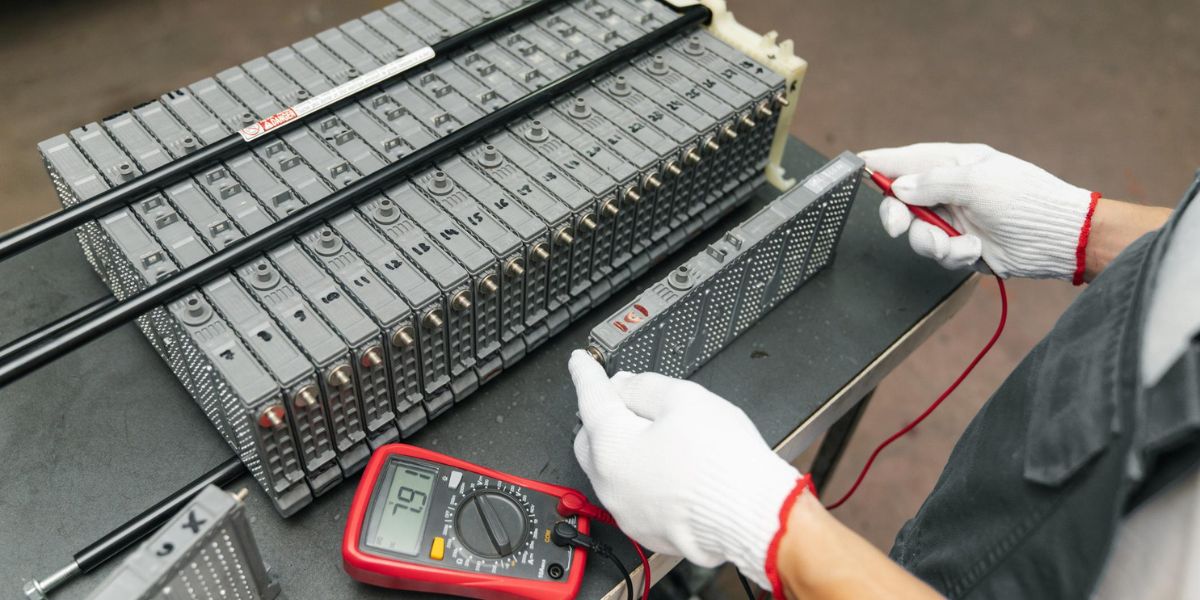
Case Study Type: Illustrative Use Case
Service: Hybrid battery diagnostics and module-level testing
Suitable For: Vehicle owners and hybrid battery workshops
The Situation
A hybrid vehicle starts to show signs of battery performance problems.
The driver noticed reduced power, inconsistent performance, warning lights, or changes in fuel efficiency.
A complete battery replacement may be considered.
These signs, however, do not always indicate that the battery is at the end of its useful life.
The problem may be connected to uneven performance between individual battery modules.
Detailed battery testing is needed before making a replacement decision.
The Challenge
A hybrid battery contains several modules that work together as one battery pack.
Over time, some modules may perform differently from others.
One module may charge or discharge faster.
Another may show reduced capacity or unstable voltage.
This imbalance can affect the performance of the complete battery pack.
Basic fault codes may confirm that a battery-related issue exists. But sometimes they are unable to provide enough information to identify the exact cause.
If you replace the complete battery without module-level testing, it may lead to unnecessary costs.
It may also mean that other suitable options are not properly considered.
The Diagnostic Approach
The first step is to carry out structured battery diagnostics.
This may include:
- Reviewing battery-related warning codes
- Checking battery pack voltage
- Comparing individual module readings
- Reviewing voltage differences under load
- Checking charging and discharging behaviour
- Assessing battery temperature data
- Looking for unusual performance patterns
- Reviewing the overall condition of the battery pack
The purpose is to understand whether one or more modules are performing differently from the rest of the pack.
Understanding Module Imbalance
Small differences between battery modules can be normal.
The concern begins when the difference becomes large enough to affect the performance of the complete battery.
Uneven module performance may cause the battery management system to limit power or record a fault.
Module testing helps create a clearer picture.
It can show whether the issue appears to be isolated or spread across the battery pack.
This information supports a more informed decision about the next step.
Possible Findings
Module-level diagnostics may identify:
- One module with weaker performance
- Several modules showing reduced capacity
- An unstable voltage reading
- A larger difference between the strongest and weakest modules
- Temperature differences within the battery pack
- Wider battery deterioration
- A fault that is not caused by the battery modules
The vehicle condition, battery history, fault codes, and test results must all be examined along with these findings.
A final decision should not be made based on a single reading.
Supporting the Next Decision
The diagnostic findings can help determine which options should be investigated.
Depending on the verified battery condition, the next step may include:
- Further testing
- Repair of an approved battery fault
- Replacement of suitable components
- Battery reconditioning
- Hybrid battery remanufacturing
- Complete battery replacement
- Investigation of a different vehicle fault
The correct option depends on the battery design, its overall condition, available equipment, technical capability, and local requirements.
Diagnostics should come before the final service decision.
How Zentiq Energy Supports the Process
Zentiq Energy supports structured hybrid battery testing and diagnostics.
This includes the processes, reporting structure, technical guidance, and battery health information needed to assess the battery more clearly.
Approved partners operating under the Complete Franchise Package may also provide hybrid battery repair, replacement, reconditioning, remanufacturing, and wider approved hybrid battery work.
All services depend on training, equipment, battery condition, local regulations, and the applicable franchise agreement.
The Illustrative Outcome
In this type of situation, module-level testing provides clearer evidence before a complete battery replacement is approved.
This allows the vehicle or workshop owner to identify whether the issue is confined to individual modules or whether the entire battery pack is affected.
Before any decision is made on repair, reconditioning, remanufacturing, or replacement, the findings shall be reviewed.
The main benefit is a more informed battery assessment.
Why Module-Level Diagnostics Matter
A hybrid battery should not be judged only by a warning light.
Detailed diagnostics help separate a suspected battery problem from a confirmed battery condition.
They also help the workshop explain their findings more clearly to the customer.
This leads to a better process of deciding whether the battery should be repaired, reconditioned, remanufactured, replaced, or further tested.
Need a Clearer Hybrid Battery Assessment?
Zentiq Energy supports hybrid battery diagnostics, module-level testing, health assessment, reporting, repair decisions, replacement planning, reconditioning, and hybrid battery remanufacturing.
Contact Zentiq Energy to discuss your hybrid battery testing and diagnostic requirements.