 Skip to content
Battery Diagnostics & Testing
Home » Battery Diagnostics & Testing
Know the Real Condition of the Battery Before You Make the Decision
A battery problem is not always obvious.
The vehicle may still drive. There may be no warning light. The owner may not notice anything unusual. But inside the battery, performance may already be changing.
Cells may be weakening.
Modules may be unbalanced.
Capacity may be dropping.
Faults may be developing.
That is why proper battery diagnostics matter.
Before you repair, replace, recondition, sell, buy, or manage a hybrid or electric vehicle, you must know what is the real condition of your battery.
Guesswork is costly.
Testing gives you answers.
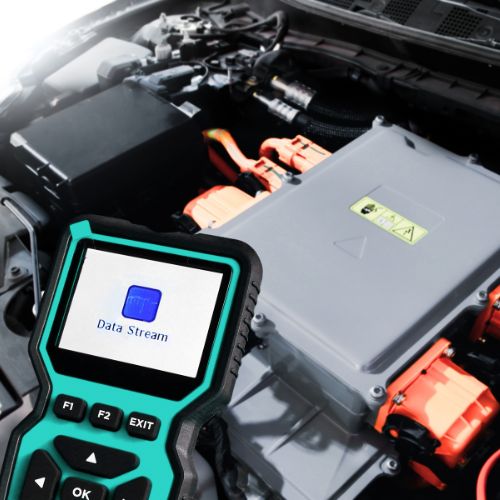
Battery Testing Comes First
Every good battery decision starts with testing.
Without diagnostics, it is easy to make the wrong decision.
A battery may be replaced when it could have been repaired.
A vehicle may be sold without knowing the battery condition.
A weak battery may stay in service until it fails.
A repair may be attempted without understanding the real issue.
Battery diagnostics help avoid those mistakes.
They show what is happening inside the battery before money is spent.
What Is Battery Diagnostics?
Battery diagnostics is a process to check the condition, performance and behaviour of a hybrid or electric vehicle battery.
This will help you determine if the battery is good, bad, defective, repairable or close to replacement.
The point isn’t to make the battery sound complicated.
The goal is to make the battery more intelligible.
Diagnostics help answer simple questions:
Is the battery healthy?
Is there a fault?
Is performance dropping?
Is the battery balanced?
Is repair possible?
Is replacement needed?
Can the battery continue in service?
Clear testing leads to clearer decisions.
What Battery Testing Can Identify
Battery testing helps identify those issues that are not seen during regular inspection.
Testing can help you find:
- Battery State of Health
- Loss of capacity
- Weak cells or modules
- Voltage imbalance
- Fault codes
- Charging issues
- Discharging problems
- Temperature concerns
- Internal resistance changes
- Battery management system data
- Early signs of failure
- Performance under load
Some issues are small. Some issues need attention. Some issues can become expensive if ignored.
Diagnostics help separate one from the other.
Why Guessing Costs Money
Battery issues are frequently misunderstood.
A warning light does not provide a complete picture.
A fault code doesn’t necessarily mean you have to replace the entire battery.
A car that drives normally does not necessarily mean the battery is healthy.
That is where guesswork is expensive.
Without proper testing, businesses may:
- Replace batteries too early
- Miss repairable faults
- Buy vehicles with hidden battery problems
- Sell vehicles without enough battery information
- Face unexpected repair costs
- Lose time investigating the wrong issue
- Make poor pricing or warranty decisions
Battery diagnostics reduce that uncertainty.
They help you decide based on evidence, not assumption.
How Zentiq Battery Diagnostics Work
Zentiq battery diagnostics are designed to provide a clear view of the battery’s condition.
The process may include battery testing, vehicle data checks, fault code review, performance analysis, and battery health reporting.
The purpose is simple.
Find out what the battery is really doing.
Not just what the dashboard tells.
Not just what the vehicle owner feels.
Not just what a basic scan shows.
A proper battery assessment looks deeper.
This helps to identify if the battery is performing properly, deteriorating or showing signs of a problem.
Battery Diagnostics for Businesses
Many businesses working with hybrid and electric vehicles find battery diagnostics useful.
Workshops
Diagnose battery faults accurately prior to recommending repair or replacement.
Dealerships
Check battery condition before buying, preparing, or selling used hybrid and electric vehicles.
Fleet Operators
Understand which vehicles need attention before battery problems cause disruption.
Auction Companies
Provide clearer battery information before vehicles are sold.
Insurance Companies
Support inspections, assessments and decisions relating to claims on battery.
Leasing Companies
Assess battery condition before lease return, remarketing, or resale.
Vehicle Buyers and Sellers
Understand the battery before making a purchase or sale decision.
Different businesses use battery diagnostics in different ways.
But the reason is the same.
Better information, better choices.
From Testing to the Right Action
Only testing that helps you decide what to do next is useful.
The condition of the battery will be diagnosed, and what steps are necessary will be determined.
Some batteries can continue operating normally.
Some batteries should be monitored.
Some batteries may need repair.
Some batteries may benefit from reconditioning.
Some batteries may need replacement.
Some batteries may be suitable for remanufacturing.
The important thing is to know which option makes sense.
That is what diagnostics help you decide.
Repair or Replace? Start With the Data
Many battery decisions hinge on one question.
Is the battery fixable or replaceable?
Don’t guess the answer.
A thorough test will help indicate if the problem is simply a repairable fault or if the battery has reached a point where replacement is more practical.
This helps avoid unnecessary spending.
It also helps prevent temporary fixes where a stronger solution is needed.
For battery decisions, testing should come before action.
Battery Health Reports and Certificates
After testing, battery information can be presented in a clear report or certificate.
This helps businesses and customers understand the results without needing to read complex technical data.
A battery health report may support:
- Vehicle sales
- Trade-in decisions
- Fleet maintenance planning
- Repair approval
- Replacement planning
- Warranty discussions
- Customer transparency
- Battery lifecycle decisions
The report turns diagnostic data into information people can actually use.
Testing Supports the Full Battery Lifecycle
Battery diagnostics are not only useful when something goes wrong.
They are useful throughout the battery lifecycle.
Testing can support:
- Early fault detection
- Battery repair
- Battery replacement planning
- Battery reconditioning
- Battery remanufacturing
- Battery health certification
- Used vehicle sales
- Long-term battery management
A battery should not be treated as a mystery until it fails.
It should be checked, understood, and managed properly.
Built for Hybrid and Electric Vehicles
Zentiq battery diagnostics support both hybrid and electric vehicle batteries.
This includes vehicles used by private owners, businesses, dealers, fleets, workshops, leasing companies, and other automotive organisations.
As more hybrid and electric vehicles enter the market, battery testing will become more important.
This is because the battery is no longer just one part of the vehicle.
It is one of the most valuable parts.
Understanding its condition protects the vehicle, the customer, and the business decision behind it.
Clear Battery Answers
Battery diagnostics should not make the decision more confusing.
They should make it clearer.
Is the battery healthy?
Is there a fault?
Is the issue repairable?
Is replacement needed?
Can the vehicle continue in use?
Should the battery be monitored?
Is reconditioning or remanufacturing suitable?
Zentiq helps turn battery data into clear answers.
That is the value of proper diagnostics.
Test Before You Repair, Replace, or Sell
Battery uncertainty creates risk. A proper battery test helps reduce that risk.
Whether you are preparing a vehicle for sale, checking a customer’s battery, managing a fleet, reviewing a trade-in, or deciding between repair and replacement, battery diagnostics should come first.
The battery should be tested.
The data should be reviewed.
The condition should be understood.
Then the right decision can be made.
That is how better battery decisions are made.
Contact Zentiq to learn more about battery diagnostics and testing for hybrid and electric vehicles.
