Skip to content
Hybrid vehicles are becoming an established part of the automotive market.
As these vehicles age, more owners, workshops, dealers, fleets, and other automotive businesses need specialist battery services.
This creates opportunities for businesses that can provide professional hybrid battery diagnostics and lifecycle support.
But starting a hybrid battery business requires more than buying diagnostic equipment.
You need the right training, safety procedures, technical processes, equipment, reporting systems, service model, and local market plan.
You also need to decide what type of battery business you want to operate.
Some businesses may focus mainly on testing and diagnostics. Others may build a wider operation covering repair, replacement, reconditioning, and hybrid battery remanufacturing.
This guide explains the main steps.
What Is a Hybrid Battery Business?
A hybrid battery business provides specialist services related to the high-voltage batteries used in hybrid vehicles.
The exact services depend on the training, equipment, facilities, and business model.
Services may include:
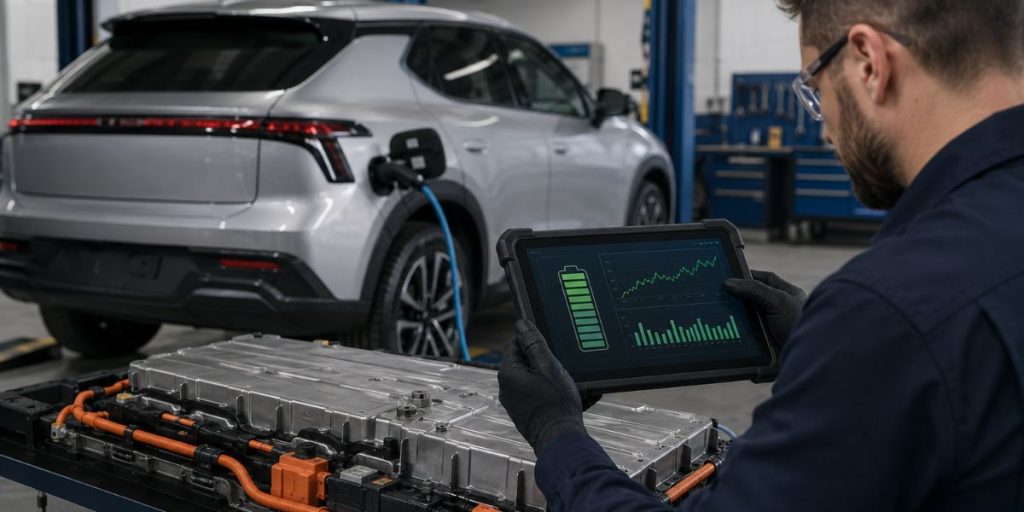
- Hybrid battery testing
- Battery diagnostics
- Battery health assessments
- Battery health reports
- Battery health certificates
- Fault identification
- Battery repair
- Battery replacement
- Battery reconditioning
- Hybrid battery remanufacturing
Not every business needs to provide every service.
A smaller workshop may start with diagnostics and battery health testing.
A more advanced operation may develop the capability to carry out wider hybrid battery work.
The important point is to build the business around a clear service level.
Step 1: Decide What Type of Hybrid Battery Business You Want
The first decision is your operating model.
There is a major difference between running a battery diagnostic business and operating a complete hybrid battery remanufacturing workshop.
Battery Diagnostics and Testing
This model focuses on understanding battery condition.
Services can include:
- Vehicle diagnostic scans
- Hybrid battery testing
- Battery health assessment
- State-of-health reporting
- Battery health certificates
- Fault identification
- Customer guidance
This can suit existing automotive workshops that want to add specialist battery services without immediately moving into complex battery rebuilding.
Zentiq Energy’s EV Battery Diagnostic Franchise is designed around this type of service model.
Complete Hybrid Battery Services
A wider battery business may include:
- Testing
- Diagnostics
- Repair
- Replacement
- Reconditioning
- Hybrid battery remanufacturing
This requires more technical capability.
It may also require additional equipment, workspace, safety controls, inventory management, and technician training.
The Complete Franchise Package supports businesses looking to develop wider approved hybrid battery capabilities.
All work depends on training, equipment, local regulations, technical capability, and the applicable franchise agreement.
Step 2: Understand Your Local Market
Before investing in equipment or premises, understand the market you plan to serve.
You need to know whether enough hybrid vehicles are operating in your area.
You should also understand who already provides battery services.
Check the Local Hybrid Vehicle Market
Look at the types of vehicles commonly used in your area.
This may include models from:
- Toyota
- Lexus
- Honda
- Hyundai
- Kia
- Ford
- Other hybrid manufacturers
Older hybrid vehicles can create demand for battery diagnostics and lifecycle services. However, vehicle population alone does not guarantee a successful business. You also need to understand the local customer base.
Identify Potential Customers
A hybrid battery business does not have to depend only on individual vehicle owners.
Potential customers can include:
- Independent workshops
- Vehicle dealers
- Used-car businesses
- Taxi operators
- Fleet operators
- Auction businesses
- Insurance-related businesses
- Vehicle inspection companies
- Other automotive service providers
Business-to-business relationships can become an important part of the operation.
Review Existing Competition
Find out which services are already available locally.
Look at whether competitors provide only battery replacement or whether they also offer proper diagnostics, reports, repair, reconditioning, or remanufacturing.
The aim is not simply to be another battery workshop.
You need to understand where your business can provide useful specialist capability.
The hybrid battery industry opportunity can help businesses understand the wider market for battery diagnostics and lifecycle services.
Step 3: Get the Right Technical Training
Training is one of the most important parts of starting a hybrid battery business.
High-voltage systems require specialist knowledge.
Technicians need to understand both the battery and the vehicle systems connected to it.
Training may cover:
- High-voltage safety
- Hybrid system operation
- Diagnostic procedures
- Battery data interpretation
- Battery management systems
- Battery module testing
- Voltage testing
- Internal resistance testing
- Temperature analysis
- Battery cooling systems
- Safe battery removal
- Battery dismantling
- Repair processes
- Reconditioning
- Remanufacturing
- Final quality checks
The training required depends on the services you intend to offer.
Diagnostic Training
A diagnostic technician needs to understand how to collect and interpret battery information.
Reading a fault code is not enough.
The technician should understand what the data means and what further testing may be required.
Advanced Battery Training
Repair, reconditioning, and remanufacturing require a higher level of technical capability.
Technicians may need to work directly with battery packs, modules, electrical connections, cooling components, and high-voltage systems.
These activities should only be carried out by properly trained people using approved procedures.
Step 4: Choose the Right Equipment
The equipment required depends on your service level.
A diagnostics-focused operation will need a different setup from a remanufacturing center.
Diagnostic Equipment
A battery diagnostic business may require:
- Professional vehicle diagnostic equipment
- Battery testing equipment
- Suitable measurement tools
- Insulation and electrical safety equipment
- Battery data software
- Reporting tools
- Technician safety equipment
Different vehicles may also require different diagnostic access and procedures.
Advanced Workshop Equipment
A business carrying out wider battery work may also need:
- High-voltage safety tools
- Insulated hand tools
- Battery lifting equipment
- Battery work benches
- Module testing equipment
- Charge and discharge equipment
- Balancing equipment
- Suitable electrical measurement tools
- Battery handling equipment
- Storage systems
- Workshop safety controls
Buying equipment before deciding on your service model can lead to unnecessary cost. Start with the services you intend to provide. Then build the equipment plan around them.
Step 5: Create a Safe Workshop Environment
Hybrid battery work needs a suitable working area.
This is especially important when batteries are removed from vehicles or opened for further work.
The workshop may need areas for:
- Vehicle diagnostics
- Battery removal
- High-voltage work
- Battery testing
- Component storage
- Battery rebuilding
- Final verification
Access should be controlled where necessary. Technicians also need suitable personal protective equipment and emergency procedures.
Local workplace, electrical, environmental, transport, waste, and automotive regulations may apply. Requirements vary between countries and regions. These should be checked before the business begins providing high-voltage battery services.
Step 6: Build a Consistent Diagnostic Process
A professional hybrid battery business should not diagnose every vehicle differently. A structured process improves consistency.
Start With Vehicle Information
Record information such as:
- Vehicle model
- Model year
- Mileage
- Customer complaint
- Warning lights
- Previous battery work
- Relevant vehicle history
Complete Diagnostic Testing
Depending on the vehicle and problem, the process may include:
- Full fault scan
- Battery voltage analysis
- Module or block comparison
- Temperature readings
- State-of-charge behaviour
- Load testing
- Internal resistance checks
- Cooling system assessment
- Supporting system checks
The purpose is to understand the actual problem before recommending work.
Record the Results
Battery test results should be recorded clearly.
A structured report helps technicians, customers, workshops, and business partners understand what was found. It also creates a record that can be reviewed later.
Step 7: Decide Which Battery Services You Will Offer
Once the battery has been diagnosed, different lifecycle options may be available.
Battery Repair
Repair may be suitable when testing identifies a specific problem that can be corrected through an approved process.
Not every battery fault can or should be repaired.
Battery Replacement
Replacement may be appropriate when the original battery is badly deteriorated, damaged, unsafe, or not economically suitable for further work.
The replacement battery may be new, remanufactured, or another suitable approved option.
Battery Reconditioning
Reconditioning can involve testing, controlled cycling, balancing, and other processes intended to improve the performance of a suitable battery.
It is not suitable for every battery.
Hybrid Battery Remanufacturing
Remanufacturing is a more complete process.
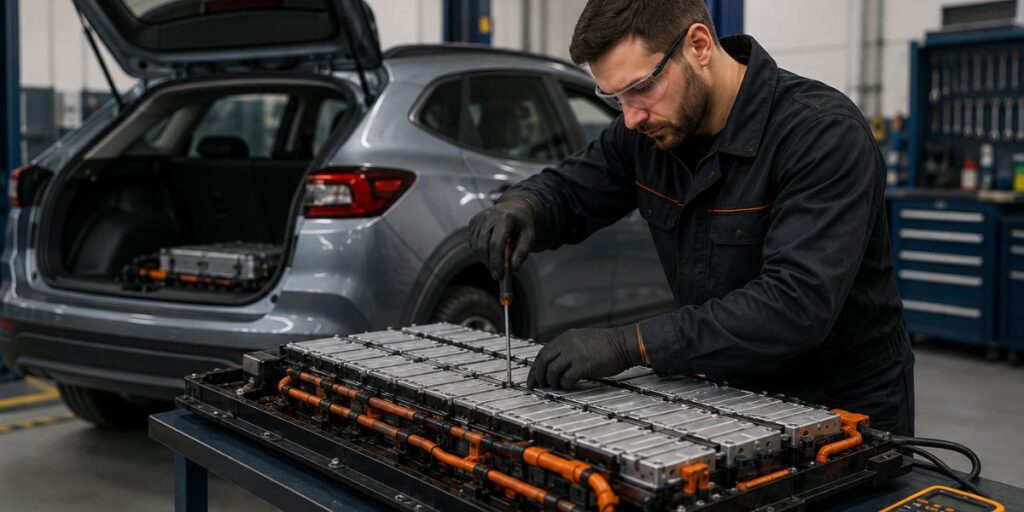
It can involve:
- Battery assessment
- Controlled dismantling
- Module or component testing
- Component selection
- Replacement of unsuitable components
- Battery balancing
- Reassembly
- Final testing
- Quality verification
Hybrid battery remanufacturing is a core part of Zentiq Energy’s wider battery business model.
Step 8: Build a Clear Pricing Model
Your pricing needs to reflect the work being completed.
Do not treat every battery service as a single fixed job.
Costs may depend on:
- Vehicle model
- Diagnostic time
- Battery design
- Parts required
- Labour
- Equipment use
- Battery condition
- Level of testing
- Repair complexity
- Warranty
- Local operating costs
Consider creating separate pricing for diagnostics and battery work. For example, the diagnostic assessment can be a paid service before any repair decision is made. This helps separate diagnosis from the sale of a replacement battery. It can also improve customer confidence because the first objective is understanding the battery.
Step 9: Create Battery Reports and Customer Communication
Battery problems can be difficult for customers to understand.
A warning light alone does not explain whether the battery needs repair, replacement, reconditioning, or remanufacturing.
Your business should be able to explain:
- What was tested
- What was found
- What the results mean
- What limitations apply
- What options are available
- What the recommended next step is
Battery health reports and certificates can make this process clearer.
Good communication is especially important when working with dealers, fleets, workshops, and other business customers.
Step 10: Plan How You Will Find Customers
Technical capability alone does not build a business.
Customers need to know that the service exists.
Build Workshop Partnerships
Existing garages may receive hybrid battery enquiries but lack specialist equipment or training.
Your business can potentially support them with testing, diagnostics, reports, or wider battery services.
Work With Dealers
Used hybrid dealers may need help assessing batteries before buying or selling vehicles.
Battery reports can support more informed vehicle decisions.
Approach Fleet Operators
Taxi businesses and other fleets may operate significant numbers of hybrid vehicles.
They may need testing, fault diagnosis, battery replacement planning, and lifecycle support.
Build an Online Presence
Your website should clearly explain:
- Services offered
- Vehicle types covered
- Testing process
- Battery reports
- Repair options
- Service area
- Contact information
Educational content can also help potential customers understand when they need battery testing.
Independent Business or Franchise?
One major decision is whether to build the operation independently or join an established system.
Starting Independently
An independent business has more freedom to create its own processes, supplier network, branding, equipment setup, and service model.
However, the business must also develop those systems itself.
That can include:
- Technical processes
- Training
- Equipment selection
- Reporting
- Marketing
- Quality control
- Supplier relationships
- Service development
Starting Through a Franchise
A franchise can provide a more structured starting point.
Depending on the package, support may include:
- Technical training
- Diagnostic processes
- Operating procedures
- Equipment guidance
- Battery health reporting
- Certificates
- Platform access
- Technical support
- Branding
- Business guidance
- Wider battery service processes
The right model depends on your experience, investment level, technical goals, local market, and the amount of support you need.
Zentiq Energy Hybrid Battery Business Options
Zentiq Energy supports different levels of battery business development.
EV Battery Diagnostic Franchise
The EV Battery Diagnostic Franchise is suited to businesses focused on:
- Battery testing
- Diagnostics
- Battery health reports
- Battery health certificates
- Customer battery assessment
It can provide a route into the battery sector without immediately operating a complete remanufacturing facility.
Complete Franchise Package
The Complete Franchise Package is designed for businesses that want wider hybrid battery capability.
Subject to training, equipment, local regulations, technical requirements, and the franchise agreement, the package can support approved services including:
- Hybrid battery testing
- Diagnostics
- Repair
- Replacement
- Reconditioning
- Remanufacturing
The appropriate package depends on what you want your business to become.
What Should You Consider Before Investing?
Before starting, review the business carefully.
Ask yourself:
Is There Enough Local Demand?
Understand the hybrid vehicle population and customer base in your territory.
What Services Will I Provide?
Decide whether you want diagnostics only or a wider battery operation.
Do I Have the Right Technical Skills?
If not, understand what training will be required.
What Equipment Will I Need?
Build the equipment plan around the services you will actually provide.
Is My Workshop Suitable?
Consider space, safety, battery handling, access, and local requirements.
How Will I Find Customers?
Identify workshops, dealers, fleets, vehicle owners, and other businesses that may use the service.
Do I Want to Build Everything Independently?
Compare the cost and time of creating your own systems against joining a structured battery franchise.
Start With a Clear Business Model
Starting a hybrid battery business can create a specialist position in the automotive market. But the business should be built in the correct order.
First, understand the local market. Then decide which services you want to provide. Get the correct training. Choose the required equipment. Build a safe workshop. Create consistent diagnostic and reporting processes. Then develop relationships with customers and automotive businesses.
You do not have to begin with every battery service. A diagnostics-focused operation can provide a practical starting point. Businesses that want greater technical capability can develop into repair, replacement, reconditioning, and hybrid battery remanufacturing. The right model depends on your market, skills, investment level, and long-term business goals.
Compare Zentiq Energy’s franchise options and discuss your territory to understand which hybrid battery business model is suitable for your market.